Who it's for

Who this is for — and who it isn't

Rocketflare is for a product where people belong to organisations and the organisation is the boundary: a team's internal tool, a customer portal, a B2B product. Three sketches of what you would build on it, then the honest list of what to pick something else for.

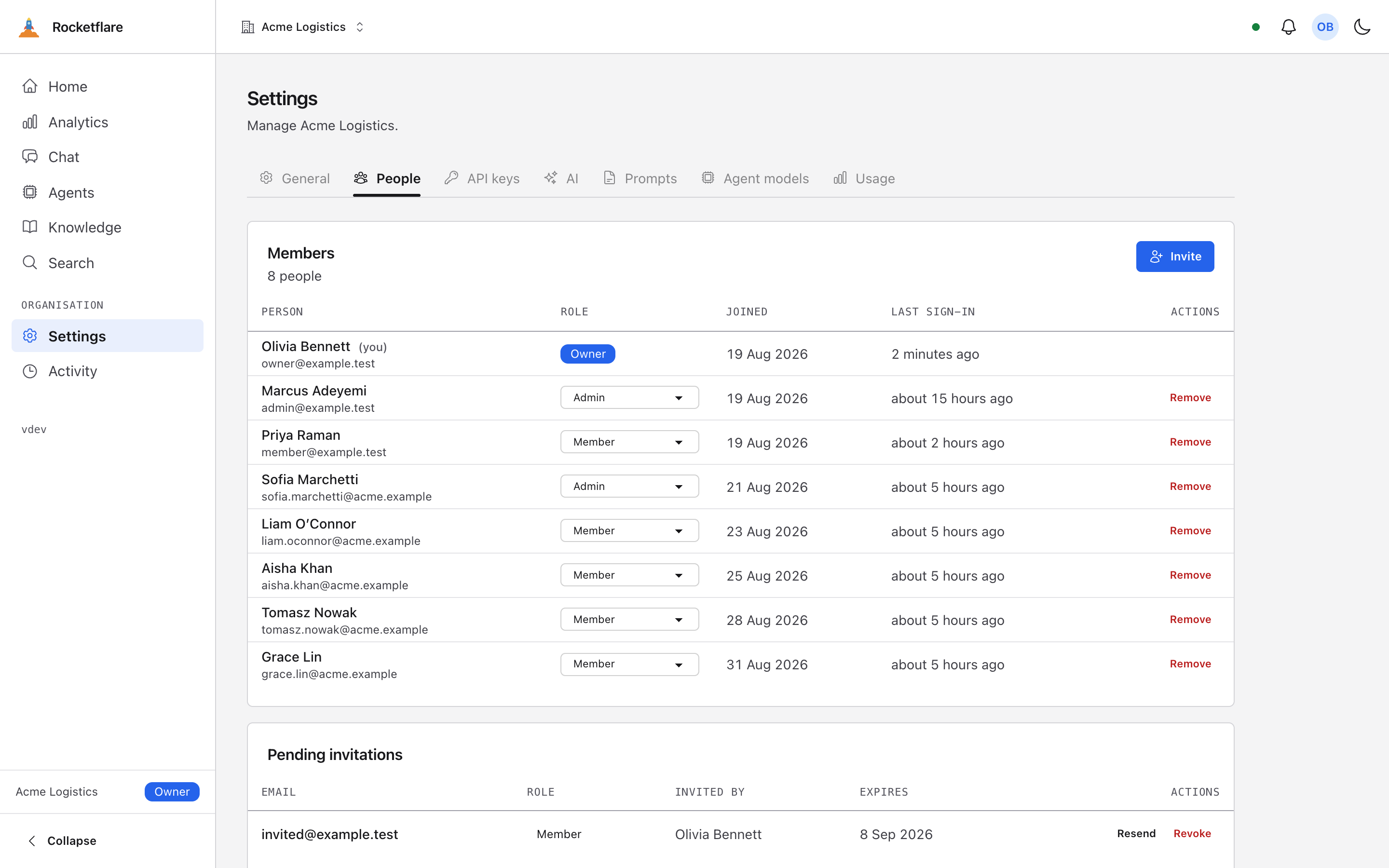
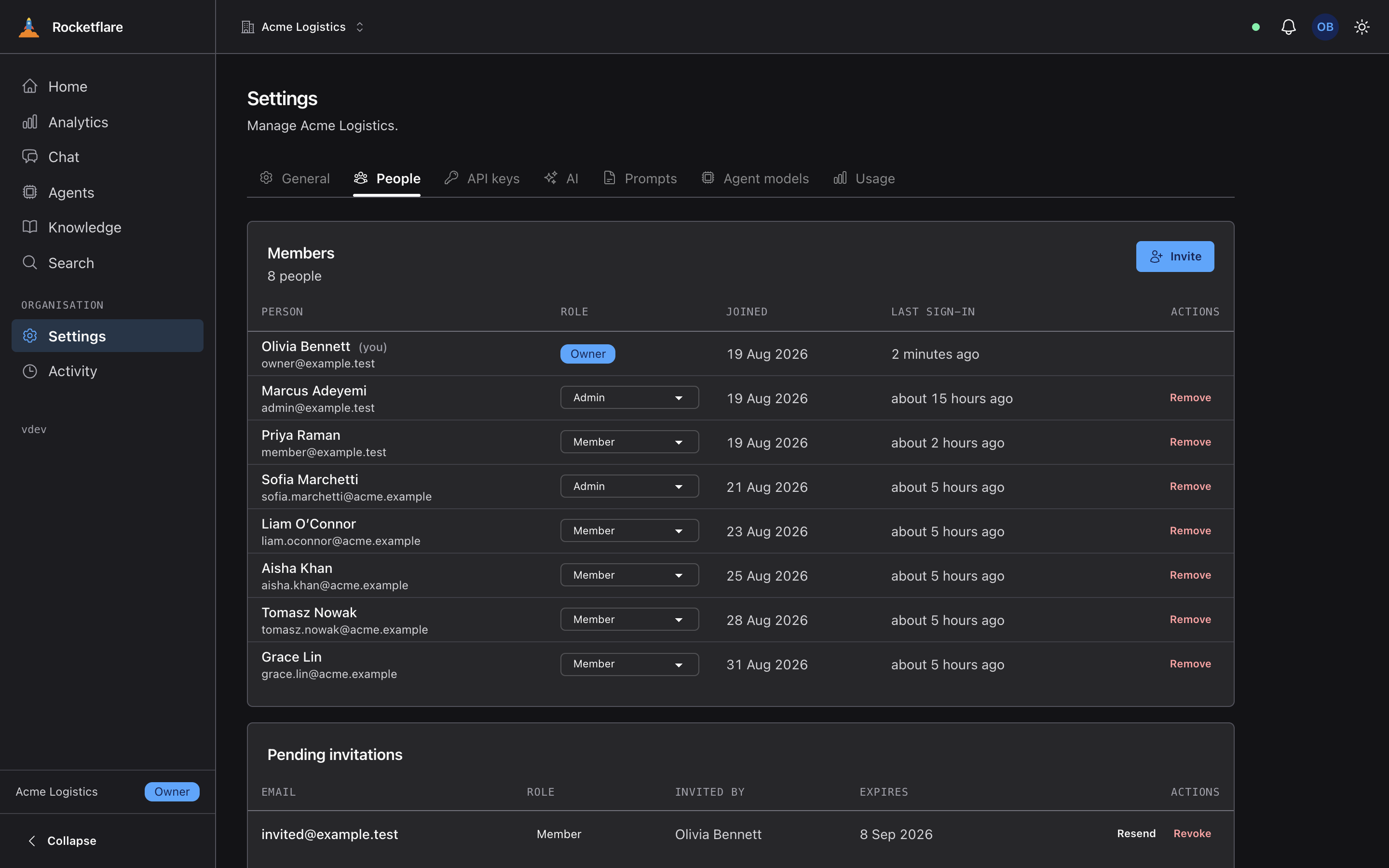
The People tab: members with their roles and a pending invitation The People tab: members with their roles and a pending invitation
What would I build · 1

An internal operations tool

The app your team opens every morning: a few tables, a few pages, and the boring parts — who can sign in, who can do what, what happened — already handled.

Already done

  • Sign-in with Google or Microsoft, or an emailed link
  • Roles — owner, admin, member — and pages that respect them
  • An audit trail of who did what
  • Background jobs and a page that refreshes when they finish

You add

  • Your tables
  • Your pages

Start

  • /adapt renames the kit to your name in one pass
  • Then one route and one page — the rules and examples show the shape

(behind it: Tenancy and access)
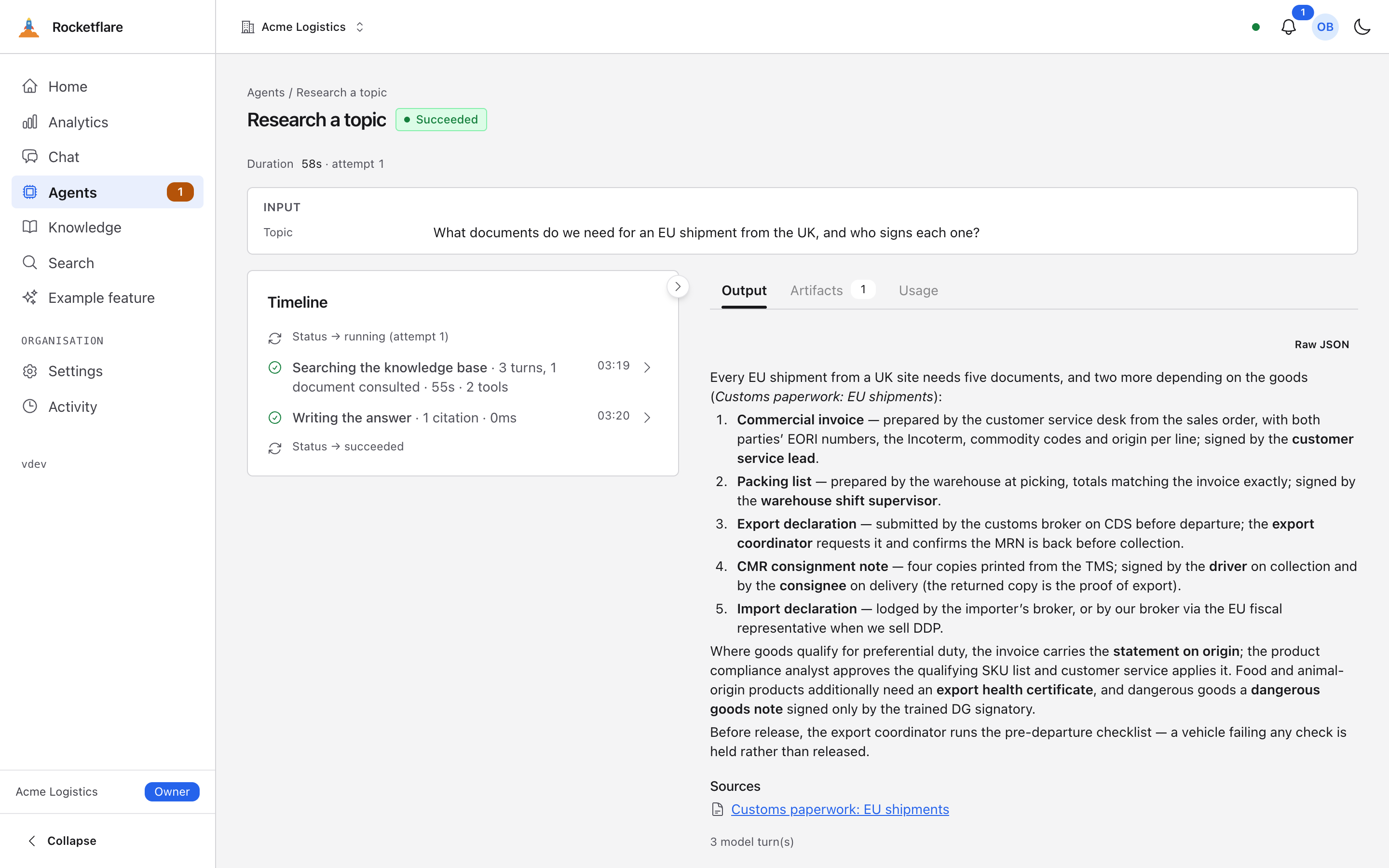
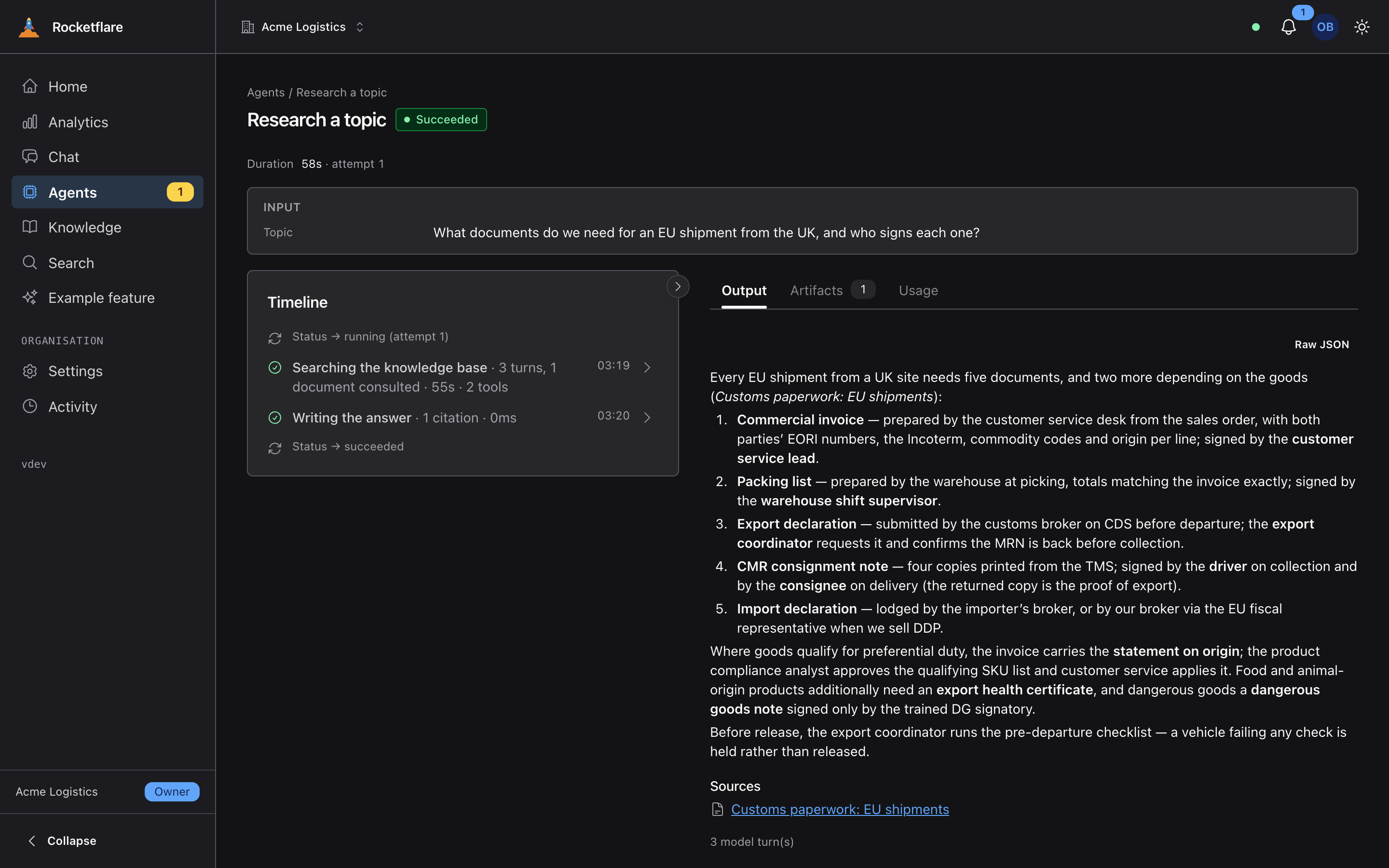
A research-topic run: the answer and its citation to the document it read A research-topic run: the answer and its citation to the document it read
What would I build · 2

A customer portal with AI over documents

Each customer uploads their own documents and asks questions about them — and never sees another customer’s.

Already done

  • Per-customer isolation — every row belongs to one organisation
  • Document upload, conversion and search
  • Chat, and agents that cite the sources they used
  • AI usage and cost per customer

You add

  • Your document types
  • Your prompts

Start

  • Ingest one document on the Knowledge page
  • Ask research-topic a question about it and read the citation

(behind it: The AI layer)

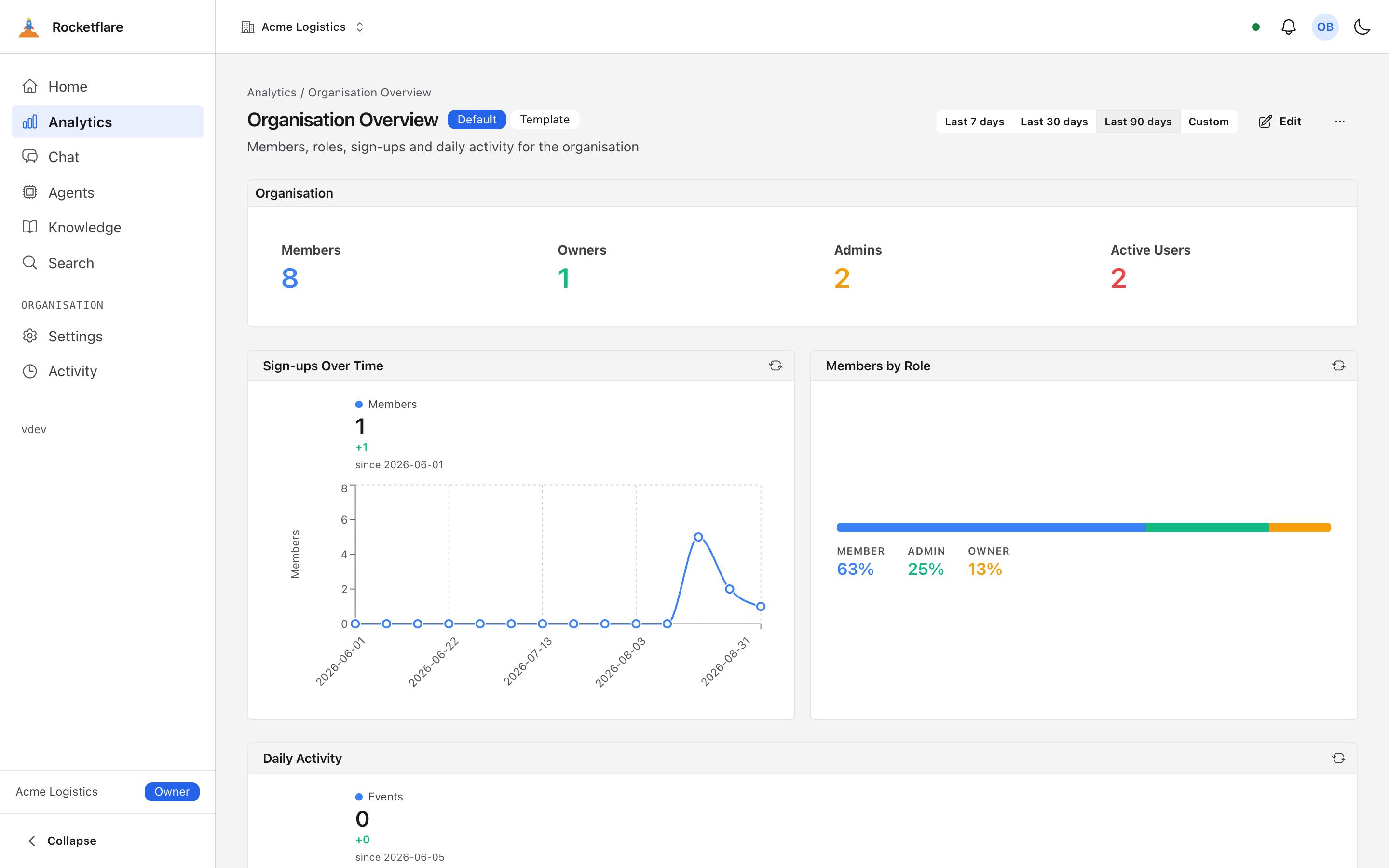
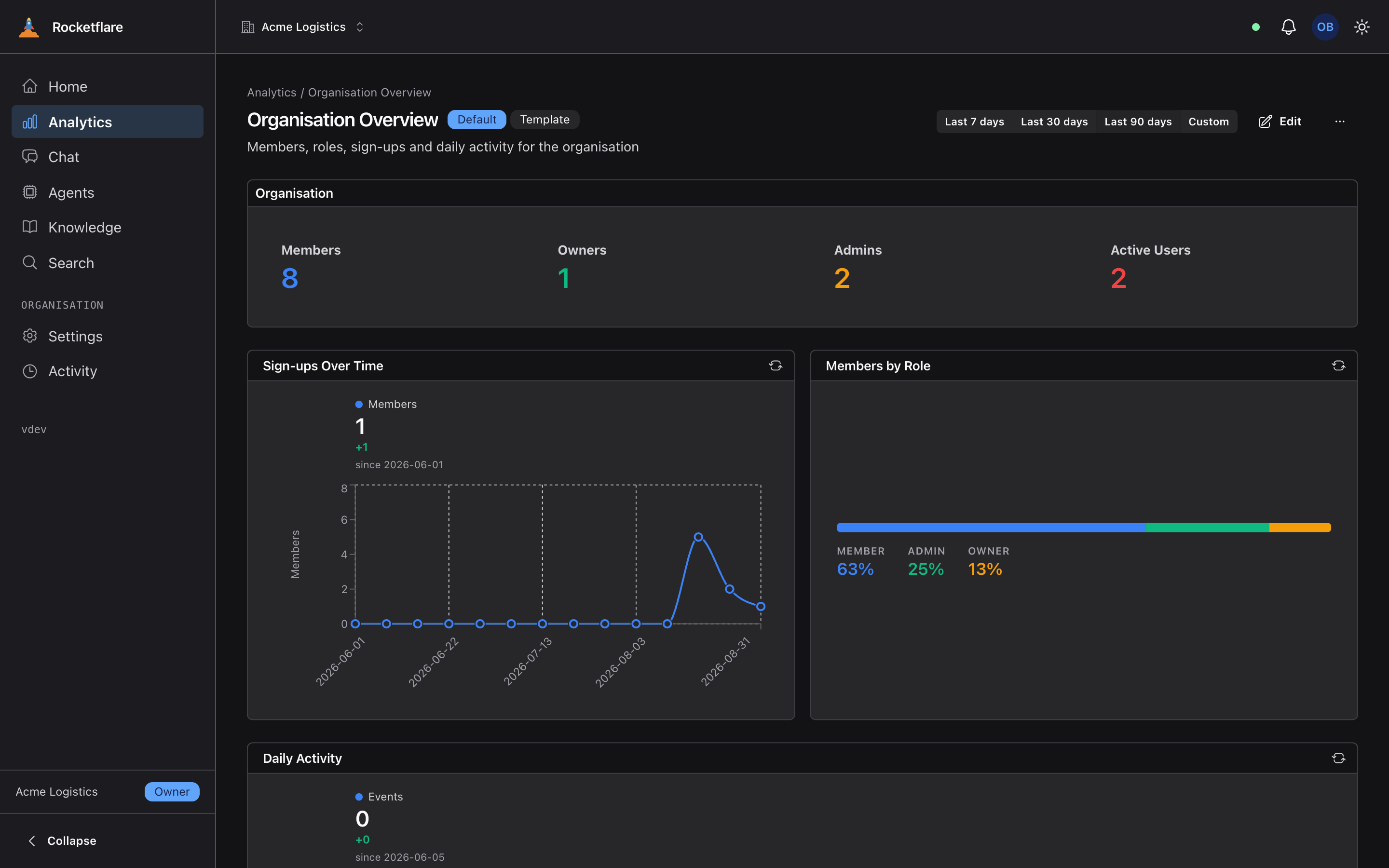
The Organisation Overview dashboard: KPIs, sign-ups over time, members by role The Organisation Overview dashboard: KPIs, sign-ups over time, members by role
What would I build · 3

An analytics-heavy B2B product

Numbers are the product: each organisation gets dashboards over its own data, kept fresh on a schedule, with a query surface for questions you did not anticipate.

Already done

  • A semantic layer: name a measure once, chart it anywhere
  • Dashboards per organisation, copied from templates in the repo
  • Summary tables rebuilt on a schedule, one organisation at a time

You add

  • Your cubes — the measures and dimensions of your domain

Start

  • One cube over one of your tables
  • Its case in the isolation test, which refuses a cube without one

(behind it: Analytics and dashboards)

The honest part

Not for you if…

  • Billing or subscriptions out of the box — there is no payments layer; add Stripe yourself, or start from a kit built around it.
  • A marketplace or a multi-sided platform — the model is organisations with members, not buyers meeting sellers.
  • A mobile-first native app — the UI is a responsive web app; the API is yours to call, but there is no native client.
  • Anything that is not Cloudflare Workers — the whole kit is one Worker over Postgres — there is no Node or Docker target for the app itself.
  • A single-user tool with no organisations — single-tenant mode keeps the organisation concept; it just stops there being more than one.

None of these is a judgement on the idea — they are the shape of this kit. A fork that adds billing is a fine fork; the kit does not carry it.